


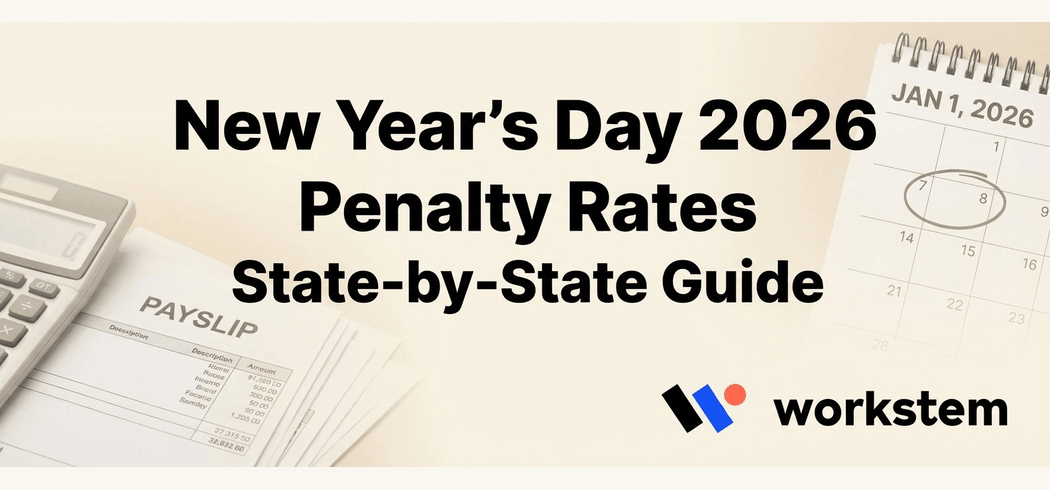
As 2025 draws to a close, business leaders and payroll managers across Australia are turning their attention to one of the first major compliance dates of the new year: Thursday, 1 January 2026. For the nation’s millions of shift and casual workers, New Year’s Day marks a key public holiday with specific—and often lucrative—pay entitlements. Navigating these rules correctly is not just a matter of fair compensation; it’s a critical business imperative. With research indicating that widespread underpayment of festive penalty rates represents a multi-million dollar compliance risk, understanding your obligations is the first step to protecting your business and your team.
This guide breaks down the public holiday arrangements, penalty rate calculations, and award-specific requirements you need to know for a compliant start to 2026.
2026 New Year’s Day: National and State-by-State Arrangements
New Year’s Day, Thursday 1 January 2026, is a nationwide public holiday. However, several states and territories also observe part-day public holidays on New Year’s Eve, which directly impacts shifts that span midnight.
- Australian Capital Territory, New South Wales, Tasmania, Victoria & Western Australia: Observe New Year’s Day only.
- Northern Territory & South Australia: Observe New Year’s Eve (31 December) from 7pm to midnight as a part-day public holiday, in addition to New Year’s Day.
- Queensland: Does not have a declared New Year’s Eve public holiday, but it’s crucial to check your specific award, as some (like the Hospitality Award) may still have special rates for this evening.
Key Consideration: An employee is entitled to the public holidays of the state or territory where they are based for work, not necessarily where they are physically working on the day. For example, an employee based in Melbourne but working in Sydney on 1 January is entitled to the Victorian public holiday entitlements.
Calculating Pay for Overnight “New Year” Shifts
Shifts that start on New Year’s Eve and finish in the early hours of New Year’s Day require careful calculation. The rule is to apply the public holiday penalty rate only to the hours actually worked on the declared public holiday.
The table below outlines how to calculate pay for an overnight shift in a state with a part-day holiday, using a shift from 10pm to 6am as an example:
| Shift Date & Time | Public Holiday Status | Hours Worked | Pay Rate Applied |
| Wed 31 Dec, 10pm – 11:59pm | Part-day PH (e.g., 7pm–midnight in SA/NT) | 2 hours | Public Holiday Penalty Rate |
| Thu 1 Jan, 12am – 6am | New Year’s Day (full PH) | 6 hours | Public Holiday Penalty Rate |
For employees in states without a declared New Year’s Eve holiday, ordinary rates (or any applicable evening or weekend penalties) would apply until midnight, with public holiday rates taking effect from 12:01am on 1 January.
New Year’s Day Penalty Rates: A Comparison of Major Awards
Public holiday penalty rates are not uniform; they are set by the modern award, enterprise agreement, or contract that covers an employee. Failure to apply the correct rate is one of the most common causes of underpayment.
The following table provides a clear comparison of penalty rates for working on New Year’s Day under some of Australia’s most common awards:
| Modern Award | Full-Time & Part-Time Employees | Casual Employees | Key Sectors Covered |
| General Retail Industry Award [MA000004] | 225% (Double Time & Quarter) | 250% (Double Time & Half) | Retail, supermarkets, shops |
| Hospitality Industry Award [MA000009] | 225% (Double Time & Quarter) | 250% (Double Time & Half) | Hotels, bars, restaurants, cafes |
| Clerks—Private Sector Award [MA000002] | 250% (Double Time & Half) | 275% | Office administration, clerical work |
| Health Professionals Award [MA000027] | 250% (Double Time & Half) | 275% | Hospitals, aged care, allied health |
Important Notes on Calculations:
- These percentages are applied to the employee’s base minimum hourly rate.
- For casuals, the listed rate is typically inclusive of the 25% casual loading; you do not add the loading on top.
- Employees also have the right to reasonably refuse a request to work on a public holiday. A request must be just that—a request, not a demand—and take into account factors like the employee’s personal circumstances and the amount of notice given.
Preparing for Australia Day (Monday, 27 January)
Once New Year’s Day has passed, the next nationwide public holiday is just around the corner: Australia Day, observed on Monday, 27 January 2026. While specific rates will again depend on the applicable award, the same public holiday principles apply.
Now is the ideal time to:
- Confirm which awards cover your workforce.
- Audit your payroll system’s settings for both New Year’s Day and Australia Day.
- Ensure your rostering managers understand the process for making reasonable requests for public holiday work.
Start 2026 Compliantly with Workstem
Manually calculating public holiday pay across different awards, employment types, and states is complex and error-prone. Workstem’s payroll and workforce management software automates this for you:
- Award Interpretation: Automatically applies the correct public holiday penalty rates from over 150 Modern Awards.
- State-Based Rules: System updates with all state and territory public holiday calendars.
- Accurate Calculations: Precisely calculates pay for employees who work or take the day off.
- Roster Compliance: Flags potential issues with public holiday staffing and refusals.
Frequently Asked Questions (FAQ)
Q1: Do I have to pay a casual employee for New Year’s Day if they don’t work?
A: No. Unlike permanent employees, casuals are generally not entitled to payment for public holidays they do not work.
Q2: A permanent employee is on annual leave over New Year’s. Do I pay them the public holiday rate?
A: No. If a public holiday falls during a period of annual leave, the employee should be paid their base rate of pay for that day, and the day should not be deducted from their annual leave balance.
Q3: Can my business be penalised for getting this wrong?
A: Yes. Underpayment of wages, including penalty rates, can result in substantial back-pay orders, fines, and reputational damage. As one employment lawyer notes, many underpayment matters are settled quickly once formally raised due to the significant penalties at stake
Q4: What is a concrete example of a “reasonable refusal”?
A: Reasonable refusals are typically linked to specific personal circumstances, such as: a pre-planned and non-changeable family gathering (with reasonable notice provided), child care responsibilities, attendance at a significant religious ceremony, or a pre-booked medical appointment.
Q5: How should I handle an “unreasonable refusal” from an employee?
A: If you believe a refusal is unreasonable (e.g., the employee provides no reason, or a very trivial reason despite generous compensation and ample notice), you may inform them in writing that their refusal is deemed unreasonable and therefore they are required to work the rostered shift. However, this carries legal risk, and seeking professional legal advice before taking this step is recommended.
Q6: How much notice must an employer give to request work on a public holiday?
A: There’s no fixed national timeframe, but “reasonable notice” is required. Factors considered:
- Industry norms (e.g., retail/hospitality often require advance notice due to trading hours)
- The employee’s personal circumstances
- Urgency of business needs
- What’s written in employment contracts or awards
Best practice: Provide at least 4 weeks’ notice where possible and document all requests.
Q7: Can an employer force employees to take annual leave on a public holiday?
A: No, employers generally cannot require employees to take annual leave on a public holiday. The public holiday should be treated separately from annual leave entitlements.
Q8: What if a public holiday falls on a weekend and the business is closed?
A: If the business is normally closed on weekends, and a public holiday falls on a Saturday/Sunday:
- Permanent employees who don’t normally work weekends don’t get paid for that day
- No substitute day is automatically created unless one is declared by the state/territory government
Q9: Are apprentices entitled to public holiday penalty rates?
A: Yes, apprentices receive public holiday penalty rates based on their percentage of the full trade rate. Check the specific award for exact calculations, as some have special apprentice provisions.
Book a free demo with our payroll experts and experience how Workstem can streamline your payroll and workforce operations.
Read More
HR Tools & Calculators
Australian Annual Leave Calculator
HR Terms & Definitions (Australia)
Leave Management & HR Software
Leave Management Software vs. Excel: Which is More Effective?
Discover the Benefits of Leave Management Software: Say Goodbye to Excel!
Why You Need to Automate Your Leave Management with HR Software
Leave Entitlements & Employee Rights
How to Calculate Leave Entitlements for Casual Workers?
Public Holidays & Leave Planning
Maximise 2025 Public Holidays: Annual Leave Hacks You Need to Know!