


Table of content
- What is personal leave in Australia?
- Is personal leave the same as sick leave?
- How much sick leave do employees get?
- How does personal leave accrue?
- Does personal leave accumulate?
- What is carer’s leave in Australia?
- Can you take personal leave for a family emergency?
- Do casual employees get sick leave?
- Do employees need a medical certificate?
- How is sick leave paid?
- Does personal leave get paid out?
- Can personal leave be cashed out?
- What happens if an employee gets sick during annual leave?
- Personal leave vs annual leave
- Common personal leave mistakes for employers
- Frequently asked questions
- How Workstem helps with personal leave
- Read more
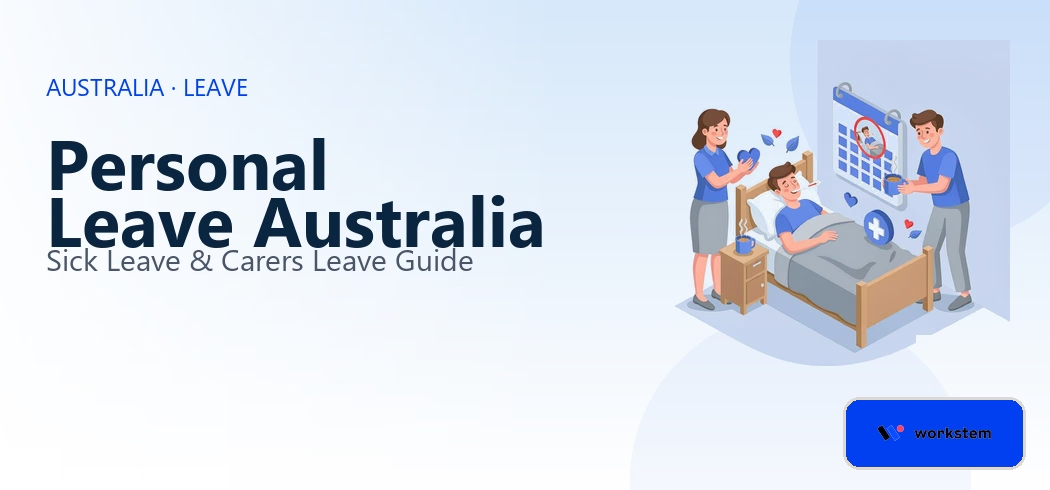
Getting sick is part of everyday life. Understanding which leave entitlement applies, how much employees have, whether it is paid and what happens to unused leave can sometimes be confusing.
For Australian employers and employees, the key term is personal/carer’s leave. It covers paid sick leave and paid carer’s leave under the National Employment Standards for eligible permanent employees.
This 2026 guide explains what personal leave is, how sick and carer’s leave works, how much employees receive, how it accrues, whether it is paid out and what employers can ask for as evidence.
Quick answer: Full-time employees generally receive 10 days of paid sick and carer’s leave each year, while part-time employees receive a pro-rata entitlement. Unused personal/carer’s leave carries over, but it is generally not paid out when employment ends.
What is personal leave in Australia?
Personal leave is commonly used to describe paid sick and carer’s leave under the National Employment Standards (NES).
Employees can use paid personal/carer’s leave when they cannot work because of their own illness or injury.
They can also use it to care for or support an immediate family or household member who is sick, injured or experiencing an unexpected emergency.
The Fair Work Ombudsman refers to this entitlement as sick and carer’s leave or personal/carer’s leave.
Is personal leave the same as sick leave?
Sick leave and carer’s leave are two uses of the same paid personal/carer’s leave entitlement under the NES.
Sick leave applies when an employee is personally unfit for work because of illness or injury.
Carer’s leave applies when the employee needs to provide care or support to an eligible family or household member.
Both generally come from the same accrued paid leave balance.
Example
Imagine an employee starts the year with 60 hours of paid personal/carer’s leave.
They use 8 hours because they are unwell.
Later, they use another 8 hours to care for a sick child.
Both absences reduce the same personal/carer’s leave balance.
How much sick leave do employees get?
A full-time employee generally receives 10 days of paid sick and carer’s leave per year.
Part-time employees receive the entitlement on a pro-rata basis according to their ordinary hours.
The entitlement can be calculated as 1/26 of an employee’s ordinary hours of work in a year.
For a full-time employee working 38 ordinary hours per week, the annual entitlement is commonly 76 hours.
What about part-time employees?
Part-time employees receive a proportional entitlement based on their ordinary hours.
For example, if an employee works half the ordinary hours of a full-time employee, their annual entitlement will generally be half the full-time entitlement.
This is why payroll systems should calculate personal leave in hours rather than assuming every employee receives the same number of hours.
How does personal leave accrue?
Paid sick and carer’s leave accrues progressively during each year of service.
The entitlement is based on ordinary hours worked.
Unused sick and carer’s leave carries over from year to year, allowing employees to build a larger balance if they do not use all their entitlement.
An employee therefore does not necessarily start each year with only 10 days available.
Their unused balance from previous years can remain available, subject to the applicable rules.
Does personal leave accumulate?
Yes. Unused paid personal/carer’s leave generally accumulates from year to year.
For example, if an employee receives 10 days in one year but uses only 3 days, the unused balance generally remains available.
The employee then continues accruing further leave in subsequent years.
This makes accurate leave-balance management important for payroll teams.
What is carer’s leave in Australia?
Carer’s leave allows an eligible employee to take time off to care for or support an immediate family or household member.
The person being cared for may be:
- A spouse or former spouse.
- A de facto partner or former de facto partner.
- A child.
- A parent.
- A grandparent.
- A grandchild.
- A sibling.
- Certain relatives of a spouse or de facto partner.
- Another person who lives in the employee’s household.
The leave can apply when the person is sick, injured or affected by an unexpected emergency.
Can you take personal leave for a family emergency?
Yes, carer’s leave can apply when an unexpected emergency affects an immediate family or household member.
An unexpected emergency is not necessarily limited to a medical diagnosis.
For example, Fair Work explains that circumstances such as needing to collect a child from school unexpectedly can potentially qualify depending on the situation.
The circumstances matter, so employees should notify their employer and explain the expected period of leave.
Do casual employees get sick leave?
Casual employees generally do not receive paid sick or carer’s leave under the NES.
However, casual employees are entitled to unpaid carer’s leave for eligible circumstances.
They can also have other leave rights under the NES and applicable workplace arrangements.
Employers should therefore avoid applying permanent-employee sick leave rules automatically to casual workers.
Do employees need a medical certificate?
An employer can ask for reasonable evidence supporting a request for sick or carer’s leave.
The employee must notify the employer that they are taking leave and, when requested, provide evidence that would satisfy a reasonable person that the leave is being taken for an eligible reason.
A medical certificate is one possible form of evidence, but the exact requirements can depend on the circumstances and any applicable award or agreement.
The important point is that employers should have a consistent process for notice and evidence.
How is sick leave paid?
Paid sick and carer’s leave is generally paid at the employee’s base pay rate for the ordinary hours they would have worked.
The payment generally excludes separate payments such as overtime, bonuses, loadings, allowances and penalty rates.
Example
An employee normally works 8 ordinary hours on Monday.
They take the day as paid sick leave.
Their sick leave payment generally covers those 8 ordinary hours rather than any overtime they might otherwise have worked.
Does personal leave get paid out?
Generally, no. Unused paid sick and carer’s leave is not paid out when employment ends.
This is an important difference between personal/carer’s leave and annual leave.
For example, an employee may have accumulated several weeks of unused sick leave after years of employment.
If they resign, that accumulated personal leave is generally not converted into a final-payment amount.
Employers should therefore keep personal leave balances separate from leave types that are payable on termination.
Can personal leave be cashed out?
Generally, employees cannot simply cash out paid sick and carer’s leave.
Fair Work identifies limited circumstances where an award or registered agreement may allow cashing out, subject to specific conditions.
Among other requirements, the employee must retain at least 15 days of untaken paid sick and carer’s leave after the cash-out.
Employees covered only by the NES without an applicable award or agreement term cannot simply choose to cash out their sick leave.
What happens if an employee gets sick during annual leave?
An employee who becomes sick or injured while on annual leave may be able to use paid sick leave instead of annual leave.
The employee must provide the required notice and evidence.
If the sick leave is accepted, the relevant days are deducted from the sick leave balance and the corresponding annual leave is credited back.
This can prevent employees from losing annual leave days because they were genuinely unwell during their holiday.
Personal leave vs annual leave
Personal leave and annual leave serve different purposes and have different payout rules.
| Feature | Personal/carer’s leave | Annual leave |
| Main purpose | Illness, injury or caring responsibilities | Rest and recreation |
| Full-time minimum | 10 days per year | 4 weeks per year |
| Accumulates | Yes | Yes |
| Used for sickness | Yes | Not normally, although annual leave can be replaced by sick leave if the employee becomes ill |
| Paid on termination | Generally no | Generally yes |
| Casual entitlement | No paid sick leave | No annual leave |
The distinction is particularly important when calculating final pay.
Common personal leave mistakes for employers
Most personal leave errors come from incorrect accruals, balances, employee classifications or evidence processes.
[add image]
Mistake 1: Giving every employee the same number of hours
A part-time employee’s entitlement is generally pro-rated.
Mistake 2: Resetting the balance every year
Unused personal/carer’s leave generally carries over.
Mistake 3: Paying out personal leave at termination
Unlike annual leave, unused sick and carer’s leave is generally not paid out.
Mistake 4: Treating carer’s leave as a separate annual entitlement
Paid carer’s leave comes from the employee’s personal/carer’s leave entitlement.
Mistake 5: Applying paid sick leave to casual employees
Casual employees generally do not receive paid sick and carer’s leave under the NES.
Mistake 6: Applying inconsistent evidence requirements
Employers should use a clear and lawful process for requesting evidence and applying it consistently.
How employers can manage personal leave accurately
A reliable leave-management process should automatically track accruals, balances, employee status and leave history.
A practical process includes:
- Set the employee’s correct employment classification.
- Calculate the entitlement based on ordinary hours.
- Accrue leave progressively.
- Carry unused balances forward.
- Record sick and carer’s leave against the same applicable balance.
- Track notices and evidence where required.
- Reconcile balances during payroll.
- Keep personal leave separate from annual leave and long service leave.
- Check final-pay calculations before termination.
Automating these steps can reduce the risk of manual balance errors, particularly in businesses with employees working different hours or employment patterns.
Frequently asked questions
Q1: What is personal leave?
A1: Personal leave is commonly used to describe paid sick and carer’s leave under the National Employment Standards.
Q2: What is personal leave in Australia?
A2: Personal/carer’s leave allows eligible permanent employees to take paid time off for their own illness or injury or to care for an eligible family or household member.
Q3: Is personal leave sick leave?
A3: Yes. Sick leave is one use of the paid personal/carer’s leave entitlement. Carer’s leave is another use of the same entitlement.
Q4: How many days of personal leave do you get in Australia?
A4: A full-time employee generally receives 10 days of paid sick and carer’s leave each year. Part-time employees receive a pro-rata entitlement.
Q5: Does personal leave get paid out?
A5: Generally, no. Unused paid sick and carer’s leave is generally not paid out when employment ends.
Q6: Does personal leave roll over?
A6: Yes. Unused paid sick and carer’s leave generally carries over from year to year.
Q7: Do casuals get sick leave?
A7: Casual employees generally do not receive paid sick and carer’s leave under the NES, although they can access unpaid carer’s leave in qualifying circumstances.
How Workstem helps with personal leave
Personal leave in Australia is really about understanding one shared sick and carer’s leave entitlement and applying it correctly.
For employers, the challenge is maintaining accurate balances across full-time, part-time and casual employees while applying the correct notice, evidence and payment rules. Managing sick and carer’s leave manually can quickly become time-consuming as your workforce grows.
If your payroll team still manages leave balances manually, reviewing your leave-management process can help reduce errors and make employee entitlements easier to track. Workstem helps automate leave management, track employee balances and connect leave with payroll, all in one platform.
See how we can help to make leave management easier for your team.
Read more
Leave Entitlements Guide
HR Insights & Resources
Final Pay in Australia: How to Calculate Leave and Termination Payments
Annual Leave & Sick Leave Pay Calculations