


Choosing between Workstem and Tanda is not simply a question of which software offers more features. Australian employers need to know whether their workforce data, award rules, approved timesheets and payroll calculations work together reliably and how much configuration is required to make that happen.
Workstem is worth considering when you want an integrated HR, workforce management and payroll platform with published coverage of 122+ award rates and 34 enterprise-agreement rates. Tanda is worth considering when you need workforce management and award interpretation alongside either Tanda Payroll or a supported external payroll system. The right choice depends on your awards, existing systems, operational requirements and total cost.
This guide compares Workstem and Tanda across award interpretation, payroll integration, rostering, pricing and Payday Super, with practical tests to help you determine which platform fits your business.
Workstem vs Tanda: Which is better at a glance?
There is no universal winner. Workstem is a candidate for employers prioritising an integrated HR-to-payroll workflow, while Tanda deserves consideration for employers focused on shift-based workforce management, award interpretation and its available payroll configurations.
| Comparison Area | Workstem | Tanda |
| Core approach | Integrated HR, workforce management and payroll | Workforce management, award interpretation, HR and payroll |
| Award interpretation | Publishes coverage of 122+ award rates and 34 EA rates, with updates via the Fair Work API | Publishes more than 30 managed award templates and support for custom rules |
| Payroll | Native payroll, STP Phase 2 reporting, payslips, superannuation and bank-file generation | Tanda Payroll, plus integrations with supported external payroll systems |
| Rostering and attendance | Integrated scheduling, attendance records and multiple clock-in methods | Rostering, time and attendance, timesheets, leave and workforce reporting |
| Payroll integration | Workforce data flows into Workstem payroll within its supported integrated workflow | Combined Tanda setup or supported integrations with external payroll systems |
| HR functionality | Onboarding, employee records, leave and expense management | HR capabilities including onboarding, employment documents and employee records |
| Pricing | Payroll Pro: AU$16 per employee/month when billed annually, excluding GST | All-in-one HR, payroll and workforce management: AU$12.80+GST per user/month |
| Key evaluation | Verify award coverage and the end-to-end payroll workflow | Verify the required award templates, payroll configuration and integration requirements |
Workstem vs Tanda: Which has better award interpretation?
The better award interpretation system is the one that correctly applies the relevant award, classification and employment conditions to each employee’s actual hours.
Australian modern awards can specify ordinary hours, overtime, penalty rates, allowances, minimum engagements, break conditions and other entitlements. These rules become more difficult to administer when employees work different shifts, change classifications or move between locations.
How do the award interpretation features compare?
Workstem states that it updates 122+ award rates and 34 enterprise-agreement rates through the Fair Work API. Its product page describes automated calculations for ordinary hours, overtime, penalties and allowances, together with checks across different pay periods.
Tanda publishes more than 30 managed award templates for major Australian industries. Its documentation describes template rules covering base rates, allowances, higher duties, breaks, minimum engagements, public holidays, variations to hours, age-based classifications and time off in lieu. Tanda also describes custom rules for enterprise agreements and conditions outside its standard templates.
| Requirement | Workstem | Tanda |
| Award coverage | Broad award-rate coverage and API-based updates | Managed templates for common awards |
| Enterprise agreements | Updates for 34 EA rates | Supports custom rules and allowances for EBA conditions |
| Overtime and penalties | Automated calculation of overtime and penalty rates | Managed templates for complex pay conditions |
| Breaks and shift conditions | Configurable rules and compliance checks | Pay rules including breaks, minimum engagement and higher duties |
| Award updates | Updates published via Fair Work API | Managed templates maintained by its compliance team |
| Payroll connection | Approved attendance data feeds into native payroll | Can use Tanda Payroll or transfer data to supported external payroll systems |
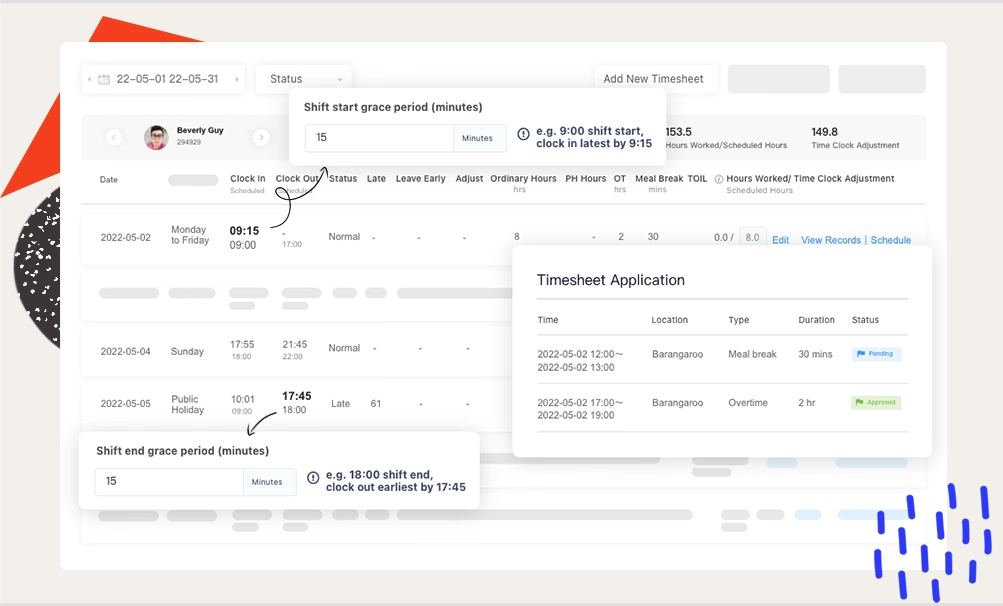
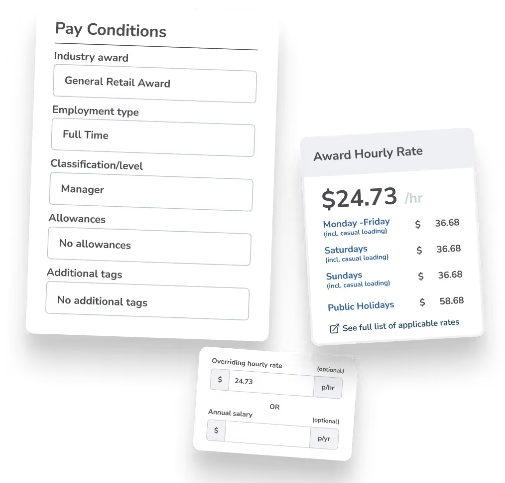
Workstem’s award interpretation helps businesses simplify award management to prevent underpayments or overpayments.
Does more award coverage mean more accurate payroll?
No. A larger published coverage figure does not automatically mean better results for your particular business.
For example, a restaurant may employ casual and permanent staff who work weekdays, weekends and public holidays. A disability support provider may need to test different shift patterns and specific conditions under the SCHADS Award.
Before choosing either platform, confirm the award coverage and classification settings you require. Then compare the calculated results with the applicable award provisions.
Verdict: Workstem has the broader award coverage , while Tanda documents a range of managed award conditions and configurable rules.
How do Workstem and Tanda compare for payroll integration?
Payroll integration matters because inconsistent employee records, approved hours, leave information and pay items can create reconciliation work and calculation errors.
Both platforms offer ways to connect workforce management and payroll. The key distinction is whether you intend to run payroll within the same platform or maintain an external payroll product.
Workstem: An integrated workforce-to-payroll workflow
Workstem has an integrated workflow in which onboarding, rostering, attendance, leave and award interpretation feed into payroll. Its payroll product includes STP Phase 2 reporting, payslips, superannuation-file generation and bank ABA files.
For businesses that want to reduce the need to transfer approved hours between separate workforce and payroll products, this approach may reduce system handoffs within the supported workflow.
Workstem also has APIs for supported integrations on its pricing page. Confirm which employee, attendance, payroll or other business data is available through the specific integration you require.
Tanda: All-in-one payroll or external payroll integration
Tanda offers an all-in-one HR, payroll and workforce management package. It also supports integrations with external payroll platforms, including Xero and MYOB, depending on the configuration.
If your business uses Tanda Workforce Management with an external payroll system, the integration must be configured for the relevant employee records, timesheets, leave types, pay items and payroll calendars.
Tanda’s Xero integration checklist documents setup steps including employee imports, award-rule and allowance mappings, leave types and payroll calendar alignment. It also explains why changes to pay items may require corresponding rule updates.
Payroll integration comparison
| Workflow | Workstem | Tanda |
| Payroll within the same platform | Native payroll within the integrated platform | Available through Tanda Payroll |
| Retain an external payroll product | Assess the requirements of the supported API or integration | Supported for relevant external payroll integrations |
| Approved timesheets | Workforce data feeds into Workstem payroll within the integrated workflow | Transferred according to the selected Tanda configuration and integration |
| Pay-item mapping | Verify payroll policies and item configuration | External integrations may require mapping between workforce rules and payroll pay items |
| Leave and employee records | Managed alongside the other workforce functions | Depends on the selected all-in-one or integrated configuration |
| Investigate transfer errors | Test validation and correction processes | Test integration errors, mapping changes and the correction workflow |
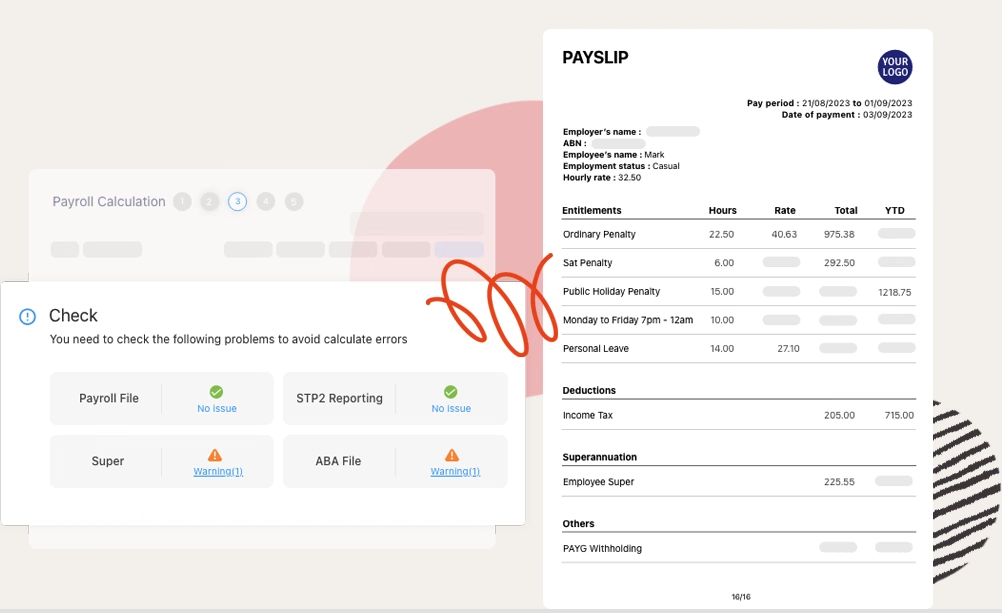
Workstem’s payroll made for business of all sizes to automate the entire process from attendance to STP2 reporting.
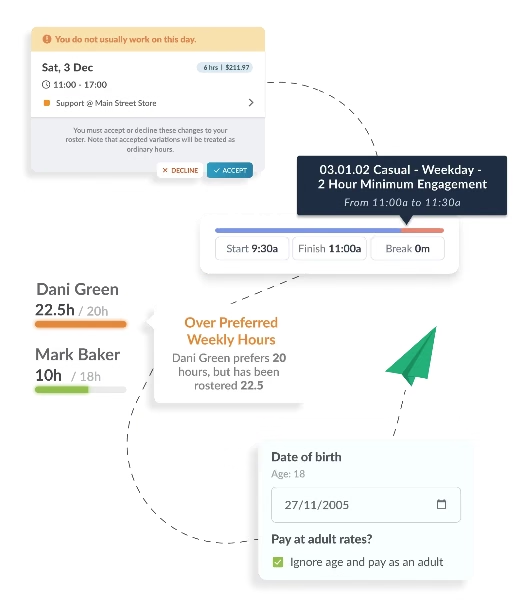
Tanda’s payroll specialises in paying shift and hourly workers quickly and accurately.
Verdict: Workstem is worth evaluating when reducing handoffs between HR, workforce management and payroll is a priority. Tanda may suit businesses that prefer its combined offering or need to connect workforce management to an existing payroll platform.
Which is better for rostering and attendance?
Rostering software should help managers schedule staff efficiently, while attendance records must capture what employees actually worked before payroll is finalised.
Both products offer rostering, time and attendance and workforce-management features. Compare how each handles shift changes, employee clock-ins, timesheet approvals and exceptions.
Workstem lists multiple clock-in methods, including GPS, Bluetooth, QR codes and facial recognition. Tanda documents rostering, time and attendance, timesheets, leave management and workforce reporting.
| Rostering and attendance requirement | Workstem | Tanda |
| Create and change rosters | Test shift creation, bulk changes and the effect on payroll data | Test roster creation, changes and timesheet effects |
| Record attendance | Evaluate GPS, Bluetooth, QR and facial-recognition options | Evaluate the time-clock and attendance methods available to your workforce |
| Reconcile actual and planned hours | Check how discrepancies are reviewed and approved | Check how attendance exceptions move through timesheet approval |
| Monitor labour costs | Review schedule-cost and payroll-analysis reporting | Review roster-cost visibility and workforce reporting |
| Manage multiple sites | Test location, permission and employee-assignment requirements | Test the same site structure and reporting requirements |
| Handle last-minute changes | Check how revised hours trigger recalculation | Check how shift changes affect timesheets and payroll data |
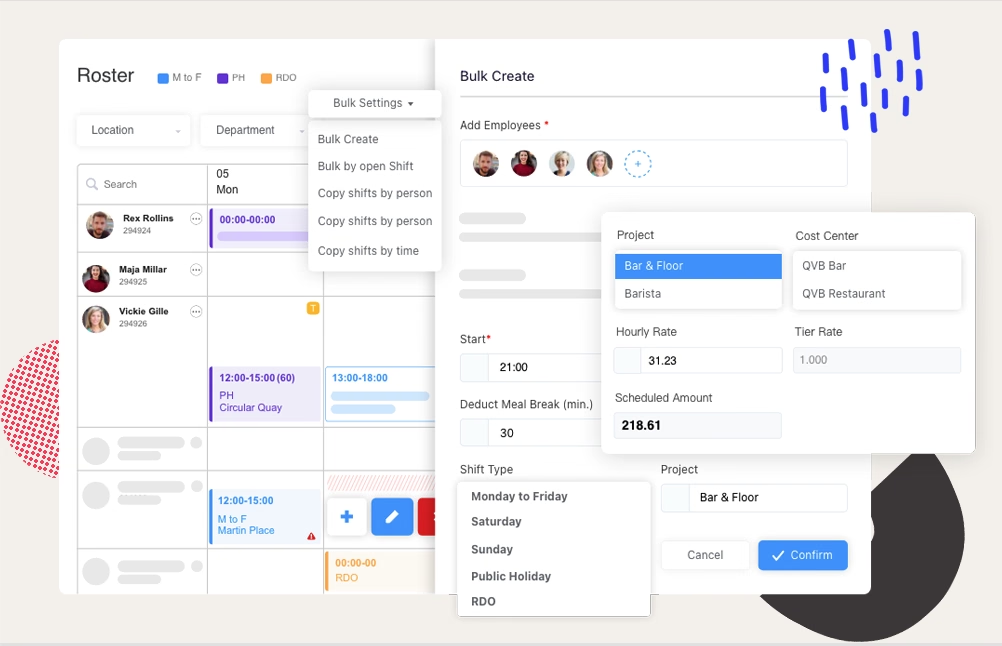
Workstem’s rostering allows for smart award rules matching, bulk scheduling and auto adjustments for multiple award rates
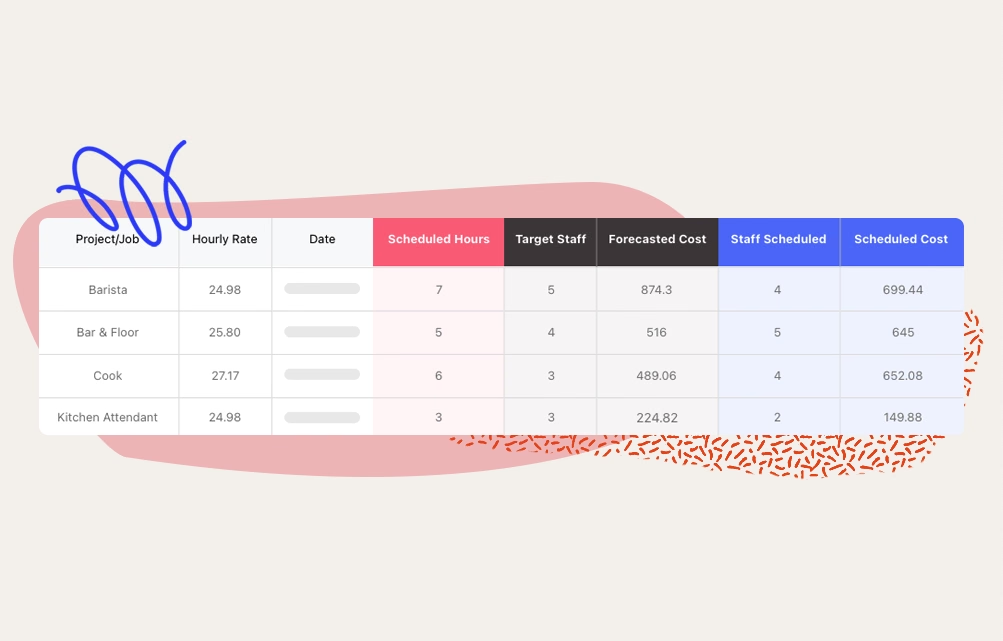
Benefit from monitoring schedule cost for smarter workforce planning
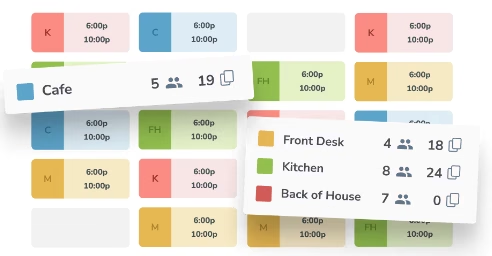
Tanda has customisable scheduling tools with copy and paste or drag and drop. Allows to build templates for specific events.
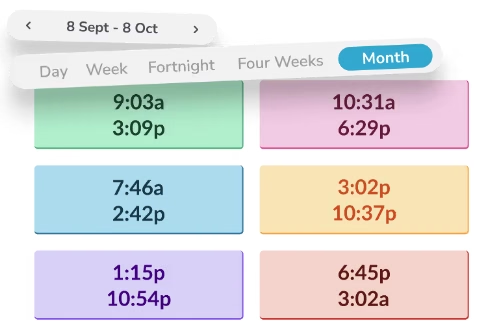
Visual overview to find issues. Able to plan roster weeks in advance and see staff leave to reduce overtime bill.
Workstem vs Tanda pricing: Which costs less?
Tanda has the lower rate but the listed prices alone do not establish the lower total cost for every business.
Workstem lists Payroll Pro at AU$16 per employee per month when billed annually, excluding GST. Tanda advertises its combined HR, payroll and workforce management package at AU$12.80 plus GST per user per month. Individual Tanda module pricing is available on request.
| Pricing factor | Workstem | Tanda |
| Package | Payroll Pro (Full integration) | All-in-one HR, Payroll and Workforce Management |
| Starting rate | AU$16 per employee/month | AU$12.80+GST per user/month |
| Individual modules | Free 14 day trial, Attendance Plus AU$7 (Attendance & leave) | Individual module prices are available on request |
| Implementation quote | Depending on business size | Available upon request |
What should you include in a total-cost comparison?
| Cost item | Why it matters |
| Billable employees or users | The charging unit can change the monthly total |
| Required modules | Rostering, attendance, payroll, HR and reporting may be packaged differently |
| Existing payroll software | Retaining external payroll may mean paying for multiple systems |
| Implementation and migration | Employee records, award rules and pay items may need setup |
| Integrations | Confirm additional licensing, configuration and maintenance costs |
| Training and support | Establish what is included and what incurs a separate fee |
| Contract terms | Compare annual commitments, renewal terms and cancellation requirements |
Request quotations using the same employee count, payroll frequency, awards, modules and implementation needs.
Verdict: Tanda has the lower price in this comparison. Workstem should be assessed on its full integrated workflow and the functions included in the required plan. Only comparable quotes can establish which option costs less for your business.
Which platform is better prepared for Payday Super?
Evaluate each platform on the complete contribution workflow: calculation, submission, payment-status visibility, corrections and confirmation of the outcome.
Since 1 July 2026, Australian employers generally need to calculate super guarantee at 12% of qualifying earnings and ensure contributions reach the employee’s super fund within seven business days of payday, unless an extended timeframe applies.
That makes prompt identification and resolution of rejected contributions an important payroll requirement. Generating a super file should not be treated as proof that the receiving fund has successfully allocated the contribution.
Workstem’s Payday Super solution and generating superannuation files as part of the payroll workflow. Tanda uses Beam as an integrated option for processing superannuation payments.
| Payday Super requirement | Questions for Workstem | Questions for Tanda |
| Qualifying earnings | How are the relevant calculations handled in the payroll setup? | How are the calculations handled in the selected Tanda Payroll configuration? |
| Contribution preparation | How are superannuation files generated and submitted? | What does Tanda or the selected payment provider handle? |
| Submission confirmation | Where is the final processing status recorded? | Where is the final status recorded across Tanda and its payment provider? |
| Rejected or returned payments | How are error messages, corrections and resubmissions tracked? | How are payment failures detected and corrected in the selected setup? |
| Deadline visibility | Can payroll staff identify outstanding contributions and exceptions? | Can payroll staff identify outstanding contributions and exceptions? |
| Audit history | What records are available for payment and correction reviews? | What records are available across Tanda and relevant providers? |
Verdict: Compare the operational workflow of which platform supports Payday Super better for your business.
Which businesses should choose Workstem or Tanda?
Choose the platform that fits your existing systems, workforce conditions and the process you need to improve.
When should you consider Workstem?
Workstem is worth shortlisting when you want onboarding, rostering, attendance, leave, award interpretation and payroll to work within one integrated platform.
It may be relevant if your team deals with several awards, enterprise agreements, complex shift conditions or repeated handoffs between workforce management and payroll.
When should you consider Tanda?
Tanda is worth shortlisting if your business relies heavily on rostering, attendance and award interpretation for shift-based workers. Its managed award templates and custom-rule capabilities may be relevant to employers whose pay conditions need careful configuration.
Consider both Tanda Payroll and the external payroll integrations relevant to your existing systems. Its lower advertised all-in-one starting rate is also worth evaluating, provided the quote covers your actual requirements.
Decision matrix
| Your priority | Recommended evaluation |
| Consolidate HR, attendance, leave and payroll | Compare Workstem and Tanda’s all-in-one package |
| Keep existing external payroll | Test Tanda’s specific payroll integration against the cost of consolidating |
| Administer several awards or enterprise agreements | Verify exact rule coverage and calculations in both products |
| Improve roster and attendance workflows | Demonstrate your actual site, team and approval structure |
| Reduce manual reconciliation | Measure the data transfers and checks required in each setup |
| Prepare for Payday Super | Test contribution processing, exception handling and confirmation |
| Reduce subscription costs | Compare written quotations with equivalent scope, terms and headcount |
If the products appear similar on the feature list, compare the accuracy of the tested pay results, the number of manual steps remaining and the effort required to maintain the system after implementation.
What should you ask before choosing payroll software?
Ask both vendors to demonstrate the same employee scenarios and provide a written quote for the same configuration.
| Test | Question |
| Award coverage | Can you demonstrate our actual award, classification and relevant clauses? |
| Award updates | How are rate changes applied and verified? |
| Shift changes | What happens when an employee finishes late, misses a break or changes shifts? |
| Timesheet approval | Can we see who approved or changed the data before payroll? |
| Payroll processing | Can we trace each pay item to the hours and rules that generated it? |
| External integration | Which records and pay items are synchronised, and what requires manual setup? |
| Payday Super | How are submissions, failures, corrections and successful outcomes tracked? |
| Audit history | Can we access the records needed to investigate a pay query? |
| Total cost | What are the full subscription, implementation, integration and support costs? |
Prepare at least three scenarios: a standard shift, a shift with multiple pay conditions, and a shift requiring a correction. Compare the resulting pay items and totals against the applicable award provisions.
Also ask each provider what its product calculates automatically and what still requires administrator review. Correct employee classifications, complete time records and appropriate system configuration remain essential regardless of the software selected.
Final verdict: Workstem vs Tanda in 2026
Workstem’s case is strongest when the business wants an integrated HR-to-payroll workflow and its published award-rate coverage matches the workforce’s requirements. Tanda’s case is strongest when its roster management, award templates and selected payroll configuration suit the business’s operating model, potentially at a lower advertised starting price.
The best choice is the one that can demonstrate the required award calculations, handle real attendance exceptions, process payroll with the right records and support the employer’s superannuation workflow.
See how Workstem handles your payroll requirements: explore our award interpretation and payroll, then evaluate the workflow using your own awards and sample timesheets.
Frequently asked questions
- Is Workstem better than Tanda?
There is no universal winner. Workstem offers an integrated HR, workforce management and payroll platform. Tanda offers workforce management, award interpretation, payroll integrations and an all-in-one package. Compare the awards, workflows, support and total cost relevant to your business.
- Does Tanda have its own payroll software?
Yes. Tanda offers Tanda Payroll as well as an all-in-one HR, payroll and workforce-management package. It also supports integrations with external payroll platforms. Buyers should compare the precise configuration they intend to use.
- Does Workstem or Tanda have better award interpretation?
Workstem publishes coverage of 122+ award rates and 34 EA rates through the Fair Work API. Tanda publishes more than 30 managed award templates and supports custom rules for enterprise agreements. Neither published figure alone establishes which platform will calculate your workforce’s pay more accurately.
- Does Tanda integrate with Xero Payroll?
Tanda publishes a documented integration with Xero Payroll. Setup includes connecting employee records, linking award rules and allowances, mapping leave types and aligning payroll calendars. Confirm the exact integration configuration you require.
- Which is cheaper, Workstem or Tanda?
At the time of review, Workstem Payroll Pro is listed at AU16peremployeepermonthwhenbilledannually,excludingGST.Tandaadvertisesitsall-in-onepackageatAU12.80 plus GST per user per month. The figures require a like-for-like quotation before comparing total cost.
- Are Workstem and Tanda ready for Payday Super?
Evaluate both against the actual contribution workflow. Workstem describes superannuation-file generation within payroll, while Tanda lists Beam as an integrated superannuation-payment option. Confirm contribution processing, deadline visibility and rejected-payment handling for the exact configuration.
- Can award interpretation software guarantee compliance?
No. Software can automate calculations and apply configured rules, but employers still need correct award coverage, classifications, employee information and working-time records. Validate the system against the applicable award provisions and actual working conditions.
- Should a business replace its payroll system to improve award interpretation?
Not necessarily. A workforce management platform may integrate with existing payroll software, while an all-in-one platform may reduce the number of systems involved. Compare the total cost, data-handling requirements and reliability of the complete workflow before deciding.
Read more
Payroll insights and related info
Workstem vs Deputy 2026: A Payroll Software Comparison
Workstem vs foundU 2026: Which is a better choice?
If Every Business Has a Payroll Software , Why Was $1 Billion in Back Pay Needed?
Top 11 Payroll Software Solutions in Australia
More industry specific articles
Top Payroll Software for MA000025 Electrical Award
Best Payroll Software for Cleaning Companies
Best Construction Payroll Software
Fair Work Compliant: Top Hospitality Payroll Software