


Table of content
- Does Payday Super apply to contractors?
- Why payroll can be correct while the business is still exposed
- Why Payday Super makes the contractor gap more visible
- The contractor workflow problem
- Example: the AP handoff creates a Payday Super problem
- The ABN misconception
- What counts toward contractor qualifying earnings?
- Contractor payments are not always simple invoices
- Contractors and employee onboarding need different workflows
- A better contractor Payday Super workflow
- What happens when a contractor payment is missed?
- The real contractor Payday Super risk is the handoff
- How Workstem can help bring contractor super into the payroll workflow
- Frequently asked questions
- Read More:
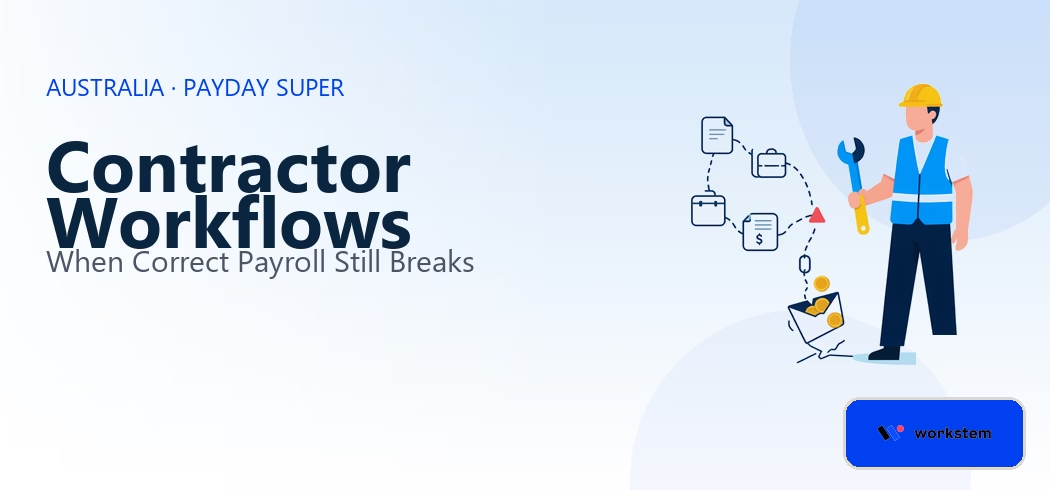
A company can have completely correct payroll and still have a Payday Super problem.
The reason is simple: not every worker who may be entitled to super is necessarily processed through payroll.
Some contractors are paid through Accounts Payable. Some submit invoices directly to finance. Some are managed by procurement or project teams. And some are engaged by one part of the business while payroll sits somewhere else.
Under Australian superannuation law, an independent contractor can still be treated as an employee for Super Guarantee purposes where the contract is wholly or principally for their labour. Having an ABN does not automatically remove the SG obligation.
From 1 July 2026, Payday Super means those obligations have to fit into a much tighter payment workflow.
The result is a new operational risk:
Payroll can be correct while the contractor super process is incomplete.
Does Payday Super apply to contractors?
Yes it can. Payday Super does not simply apply based on whether someone is called an employee or contractor in an organisation’s systems.
For SG purposes, certain contractors fall within the extended definition of employee.
The ATO says an independent contractor may be treated as an employee for SG purposes where the contract is mainly for their labour. This can apply even when the individual operates through an ABN.
The key factors include whether the contract:
- is mainly for the person’s labour
- requires the person to perform the work personally
- pays for their labour and skills rather than a specified result
- cannot be delegated to someone else
By contrast, a genuine contract for a result may fall outside the SG rules, depending on the circumstances.
Why payroll can be correct while the business is still exposed
Consider how a typical business might process workers.
Employees
HR → Payroll → Pay run → Super
The payroll system calculates wages and SG together.
Contractors
Procurement → Contractor → Invoice → Accounts Payable → Payment
There may be no payroll event at all. It creates a gap.
If the contractor is an employee for SG purposes, the business still has a super obligation even though the payment originated in Accounts Payable.
Grant Thornton specifically identifies this issue under Payday Super: contractor payments made outside payroll can create timing and visibility risks because finance teams may make the payment without payroll knowing that a super obligation has been triggered.
Why Payday Super makes the contractor gap more visible
Before Payday Super, an organisation could potentially accumulate contractor SG obligations and deal with them through a quarterly process. That operating model changes from 1 July 2026.
The employer generally needs to ensure the super contribution is received by the fund within 7 business days of the relevant QE day, unless an allowable longer period applies.
For an eligible contractor, the timing is therefore connected to the contractor payment. The Australian Government’s Creative Workplaces guidance states that for independent contractors who are entitled to super, super is paid when the contractor’s invoice is paid and must reach the fund within 7 business days. That means Accounts Payable can effectively become part of the Payday Super process.
The contractor workflow problem
Imagine a business that engages a freelance worker.
The contractor:
- has an ABN
- submits invoices
- is paid by Accounts Payable
- is not included in the normal payroll
- performs the work personally
- is paid primarily for their labour
The finance team approves an invoice and pays it.
If the arrangement falls within the SG extended employee definition, that payment can trigger an SG obligation.
But the payroll may not know anything happened.
The workflow is therefore:
Invoice approved → payment released → payroll unaware → super not processed
The payroll system can be perfectly accurate.
It simply never received the information required to calculate or pay the contractor’s super.
Example: the AP handoff creates a Payday Super problem
Suppose a contractor is an employee for SG purposes and receives a $10,000 qualifying payment. Accounts Payable pays the invoice on 8 August. The contractor payment creates the relevant QE day.
Under Payday Super, the employer generally needs to ensure the super contribution is received by the fund within the applicable timeframe. But the AP team may think its job ended when the $10,000 invoice was paid.
Payroll may not see the transaction until the following month. That is the failure point. The problem started with worker classification and system ownership.
The ABN misconception
The ATO explicitly says the existence of an ABN does not determine whether a contractor is an employee for SG purposes.
The underlying arrangement matters. For example, where a contractor is engaged under a contract mainly for their labour and must personally perform the work, SG can apply.
What counts toward contractor qualifying earnings?
Payday Super introduces the concept of qualifying earnings (QE).
The legislation expressly includes payments under contracts covered by the extended employee definition where those payments are for the person’s labour. That makes contractor classification and payment classification important upstream controls.
A contractor workflow should establish:
- Who is covered by SG?
- What part of the payment represents labour?
- When is the payment made?
- What is the QE day?
- How is the SG contribution calculated?
- Who is responsible for submitting and monitoring it?
The ATO’s contractor guidance also distinguishes the labour component from materials, equipment and GST when determining the super obligation under contractor arrangements.
Contractor payments are not always simple invoices
A contractor could be paid through:
- hourly invoices
- weekly invoices
- milestone payments
- project payments
- recurring monthly invoices
- one-off payments
That makes the workflow harder to standardise.
For example, a contractor may submit an invoice at the end of the month but be paid several days later. The important operational date is the payment of qualifying earnings, not simply when someone uploaded an invoice into the accounting system.
Under Payday Super, each day on which qualifying earnings are paid can be a separate QE day. That means finance and payroll processes need a common view of when contractor payments create SG obligations.
Contractors and employee onboarding need different workflows
A common mistake is to build one onboarding workflow for employees and assume contractors sit outside it.
For SG purposes, that is not always true.
An eligible contractor may need:
- super eligibility assessment
- choice-of-fund handling
- fund details
- contribution calculation
- contribution processing
- payment tracking
- exception handling
The ATO also states that independent contractors who are employees for SG purposes are generally eligible to choose their super fund, with relevant stapled-fund processes where they do not choose one.
It needs a superannuation decision attached to the engagement.
A better contractor Payday Super workflow
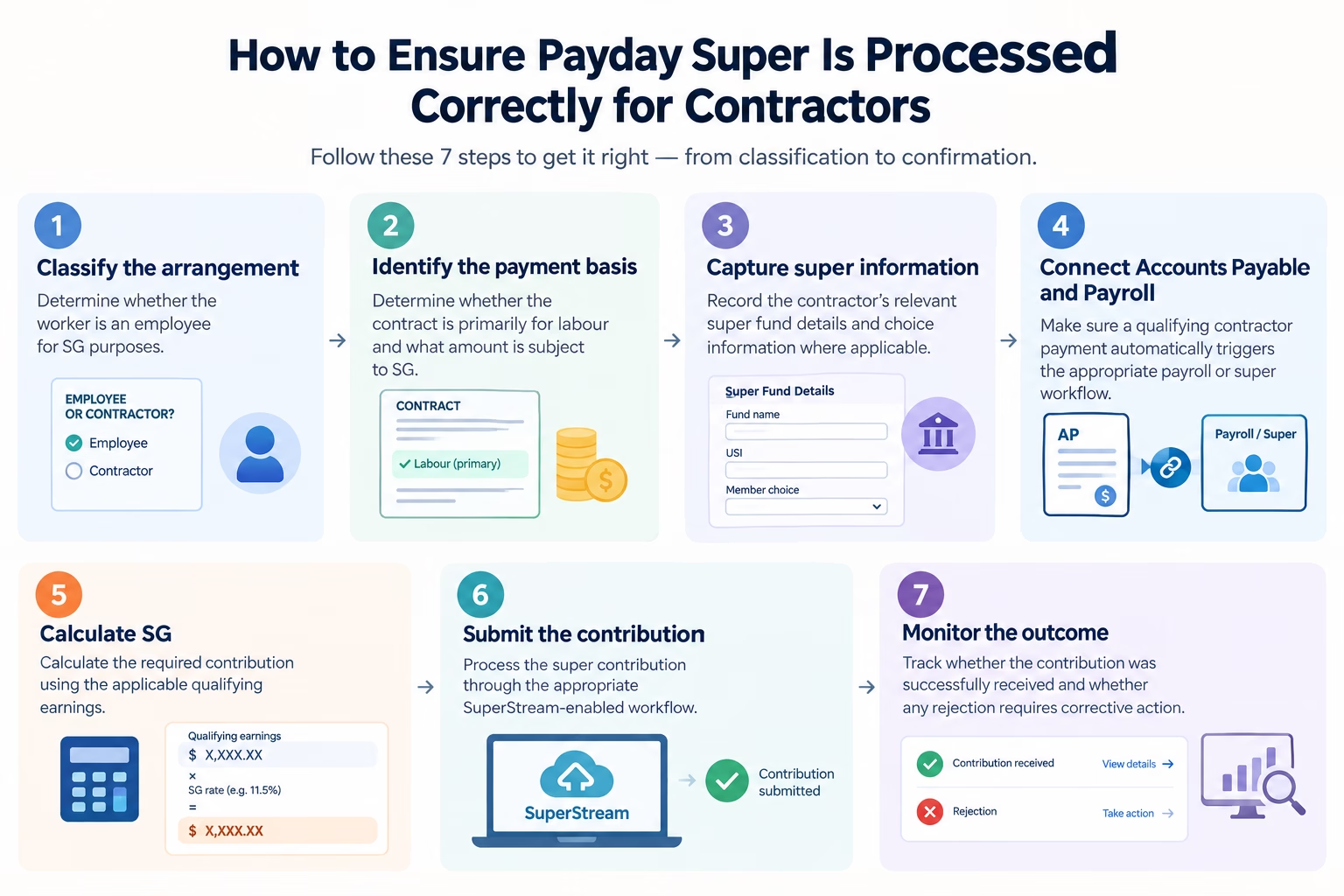
What happens when a contractor payment is missed?
The consequences can become more complicated than correcting a normal payroll entry.
A missed contractor SG contribution can involve:
- identifying whether the worker was covered by SG
- reconstructing payment history
- determining the relevant QE days
- calculating the SG liability
- identifying when the contribution should have been received
- correcting the payment
- managing the associated reporting and compliance process
The longer the issue remains unidentified, the harder the reconstruction becomes.
That is why the contractor workflow should be monitored at the point of payment rather than discovered through a later audit.
The real contractor Payday Super risk is the handoff
The biggest contractor problem is often not a payroll calculation error.
It is a workflow gap:
Contractor classification → invoice → Accounts Payable → payment → super calculation → contribution
If Payroll only sees the final step, the process is already broken.
Payday Super makes this more important because super contributions must now move much closer to the underlying payment event.
The practical lesson for employers is straightforward:
Don’t ask only whether your payroll system is Payday Super ready. Ask whether your entire contractor payment process is.
How Workstem can help bring contractor super into the payroll workflow
Workstem’s Payday Super solution calculates SG using qualifying earnings, supports workers covered by the extended employee definition including independent contractors paid mainly for their labour, and processes super alongside payroll. It also supports contribution records, SuperStream files and reporting across pay periods.
For businesses using Accounts Payable for contractor payments, the important consideration is how those payment events are brought into the payroll and super workflow so eligible contractor contributions are not left outside the normal process.
[See how Workstem can help with Payday Super]
Frequently asked questions
Q1: Does Payday Super apply to contractors?
A1: It can. Contractors who are employees for SG purposes are subject to the applicable SG rules, including the Payday Super changes.
Q2: Does having an ABN mean a contractor does not receive super?
A2: No. The ATO states that an ABN does not determine whether a contractor is an employee for SG purposes.
Q3: Should contractor super be handled through payroll?
A3: The important requirement is that the business has a process that identifies the SG obligation and ensures the contribution is calculated and paid correctly. Where contractor payments are handled through Accounts Payable, the AP-to-payroll or AP-to-super handoff becomes particularly important.
Q4: When does the Payday Super clock start for a contractor?
A4: For a contractor covered by SG, the timing is linked to the payment of qualifying earnings. The Australian Government’s guidance says super for eligible independent contractors is paid when their invoice is paid, with the contribution generally required to reach the fund within 7 business days.
Q5: What part of a contractor payment is subject to super?
A5: For contractors covered by the SG rules, the labour component is relevant. The ATO says materials, equipment and GST are not included in the labour amount used for the SG calculation.
Read More:
More Payday Super related articles
Payday Super Australia 2026: Real-Time Superannuation Payment Guide
How Payday Super Affects Your Business
Payday Super Cash Flow Management: Avoiding Business Disruption
Payday Super Rejected Payments: What Employers Should Do
Payday Super Maximum Contribution Base: Annual MCB Explained
MVR Explained for Employers: What Happens Before Super Is Sent
Superannuation guides
Superannuation Guarantee 2026: 12% Rate Complete Guide